NoshLive is next month.
Be in the room to network with food industry professionals, including leaders from Lexington Bakes, Sunny, Fly by Jing, Goodles, Whole Foods, Good Culture, A Dozen Cousins, Fourth and Heart, Glow Nuts, Albertsons, Wellness Growth Ventures, and more.
Join them on December 5th and 6th at Marina Del Rey.
See the growing attendee list and register at noshlive.com.
Welcome to the Community Call Podcast.
I am Melissa Travers, Director of Community here at BevNET & NOSH, here with my co-host, Sara Casa Grande, Principal and Sales Advisor at Generation CPG.
If you're enjoying this show, please follow and review us wherever you listen.
Sara Casa Grande, Sara Casa Grande, you know, you really do have such a fun last name to pronounce, I told you this.
I was talking to Ashley Waldman, the founder of Jubilee just yesterday, and she said you have the most fun name to hear and pronounce ever, and that's so true.
That's so sweet.
Yeah, I think it's a lot of fun too.
It's my husband's last name, and when we got married, I was like, I'm taking that.
That's mine now.
Yeah, big house.
Like, what more could you want?
I wish I had a big house.
I don't, but I have the last name big house.
That's almost the same thing, right?
It's just as good for sure.
So Ashley is starting up a beverage brand, which of course is not an easy thing to do.
And she was asking all the right questions.
We wound up talking about margin.
And we were kind of talking about what the most ideal margins for beverage are.
I thought it was 40-ish, but then I talked to you, it's even more than 40?
Yeah, I feel like it used to be 40, but these days I recommend 50 at a minimum.
60 is ideal, but everybody's different.
It used to be 40.
It's very expensive getting started in CBG, plotting, freight, brokers, logistics.
It all costs a lot of money, a lot more than people realize when they get started.
So economies of scale, there's this myth that you're going to reach that in year one, year two.
It just doesn't really happen.
It takes a lot longer than that.
So I recommend at least 50, preferably 60.
And I'm sorry to be the bearer of bad news, but that's what I like to see getting started.
Hopefully that news isn't too disappointing to the brands out there.
I know it's hard to get numbers like that.
And I do want to extend to anyone who's listening to this podcast.
If you have a brand and you have any questions, whether they're about margin, anything else, please feel free to reach out.
I'd love to try and get you some help and get you some answers.
You can feel free to reach out to me and the team over here in our Slack community, slack.bevnet.com.
So please reach out and maybe we can do something for you.
I'd also like to add that I'd welcome any questions if anyone wants to reach out to me.
I'm in the BevNET Slack.
My email is sarah at generationcpg.com.
And feel free to send any questions about margin or anything else about sales my way.
That's a serious opportunity, Sarah.
You've worked in this industry for so long and worked with some of the biggest brands out there.
So that is certainly a wonderful offer.
Thanks for that.
In other CPG community news, we saw that Mazza went global with Whole Foods Market, which is so exciting.
Such a great team and such a fantastic, such a great product.
I love that brand so much.
They're just two of the nicest people in the business, too.
And the product is fantastic.
It tastes fantastic.
And the branding is amazing.
They sent me one of their t-shirts and I love it so much.
Just everything about Mazza I couldn't love anymore.
We also saw that Nguyen Coffee launched with Sprouts after being in the innovation set.
We got this sample of Cirilla's antioxidant spritzer.
This is the spiced apple flavor.
This is a new flavor that Sarah put out.
She sent it to us over here at BevNET.
It's very tasty.
And you know what I love is that there's 49 milligrams of caffeine in the can.
I think that's such a nice number.
I feel like at 3 p.m.
I like a little bump, but I don't want to be up all night.
Oh, I haven't seen that before.
Isn't it cute?
Yeah, it's really cute.
And her name is Sarah.
Sarah, it says.
Okay, I mean, I love it already.
And Sarah, I know that you were chatting with a brand that is very much aligned with a community call that we did this week with Brightfield Group on Women's Health.
Yes, it's a brand called MIM.
Right now, they're D2C, so the founder, Ashley Montgomery Ross, she's a friend of mine.
She's amazing.
We worked together on the brand on it a couple of years ago.
She has two products right now, both specifically for menopause and period menopausal women.
They have a day formula and a night formula.
I've been beta testing it for a while before launch, and I was really impressed, and not just because she's my friend.
Really, really helped.
Just brain fog.
It helps with sleep.
I take the night formula, and I sleep much, much better now than I used to in the past.
It has great ingredients, really clean, vibrant packaging.
It has ashwagandha in it.
I feel like a little boost when I take it during the day.
It's a great brand.
I can't wait to see where she launches in retail first.
But right now, I believe it's just DTC.
I think I could do a little beta testing as well.
Is it M-I-M?
Yes, it is.
Capital M-I-M.
This is what it looks like right here.
I love the packaging.
Really colorful.
Yeah.
Actually, it's awesome.
I'll get you some samples.
Well, everything you just mentioned came up in that Community Call with Brightfield Group, and if folks out there want to watch a video, they can check that out at bevnet.com/communitycall, and then the podcast will be out in a few weeks.
So everything you mentioned, they talked about.
They also talked about gut health, of course.
And it's so crazy to me that this is such a large demographic of women.
Forty-six percent of women are postmenopausal, eight percent are in perimenopause.
But this affects women in their late 30s and early 40s, all the way up to mid-50s, late 50s.
So it's a huge demographic of people, and every woman goes through it.
So in my opinion, it's kind of low-hanging fruit.
And so many of the need states and symptoms are already ones being addressed by so many products out there.
Like how easy would it be for a gut health brand to position themselves to women who are in kind of that mid-stage of life, or non-alc brands, women who are trying to consume less alcohol?
It just seems like low-hanging fruit.
Yeah.
I mean, the brand Poppy, right?
Like they're not marketing it specifically towards women, but I mean, happy, happy gut, happy woman.
Happy gut, happy woman is definitely right.
I mean, it's beautiful packaging.
I feel like it is like, you know, it stands out to me as a woman consumer, and it also addresses gut health.
I don't know if they're actively targeting women as their core audience, but to me, that seems like a no-brainer.
Yeah.
Happy gut, happy woman, sad gut, sad woman.
Sad woman.
One of the other topics that came up was inflammation, and that's something that I've seen so much of recently as well.
I checked out the Galveston diet.
It's by Dr.
Mary Claire, and this is a diet aimed towards women in perimenopause, menopause.
But inflammation has been a topic of discussion since the beginning of time.
I mean, Andrew Weil, the man with the beard who's not Santa, has been talking about this for decades.
Hungry Root has an anti-inflammation meal box.
Weight Watchers has an anti-inflammatory package or eating plan.
Noom has one.
So that's a big one.
I've been trying to follow an anti-inflammatory diet.
I know.
I support you in that endeavor.
We're all on flame these days.
I feel like everything does it, right?
Like sugar, stress, greasy food, sedentary lifestyles, like we're not moving as much as we should.
I've been taking turmeric.
That's what I've been doing.
I've been juicing it.
I've been freezing it in little ice cubes with some ginger and putting it in my tea in the morning.
Look at you.
I might add some black pepper next time, just so you know.
Because black pepper is what you need to activate the curcumin, right?
It is.
And actually, I think that's also in black pepper, if I remember correctly.
Yeah, it is black pepper.
Do you want to hear what my new favorite dessert is on my anti-inflammatory diet?
Is it bread pudding?
No, not even close.
You're going to think this is really depressing, but it's a scoop of cottage cheese, a scoop of 2% Greek yogurt, and then I mix in some protein powder.
It doesn't have sugar in it, but it has some little stevia in it to give it some sweetness.
And then I cut up like a pear or an apple, and then I dump a bunch of cinnamon on it.
I think it's delicious.
I use Good Culture cottage cheese.
They make the finest cottage cheese I think that I've come across.
I used to like the friendship, but once I tried Good Culture, I was sold.
I am not a cottage cheese person.
It's the texture for me.
I can't.
I've heard that you can blend it though.
Is that what you do when you make this?
I tried blending it at first, and then it just seemed like too much work.
In Good Culture's curds are very soft.
They're not like hard and squeaky.
Sarah, I'm going to make you one of my cottage cheese and yogurt bowls someday, and you'll see.
I may turn you around.
I'll try it, Melissa, and you're a really great salesperson.
So it all sounds great, but I just can't get over the texture.
But maybe you can change my mind.
You can make it for me when I come to the office next time.
I'm going to see what I can do.
Get ready for a cottage cheese bowl headed your way, Sarah.
I'm ready.
Speaking of Good Culture cottage cheese, Jesse Merrill is going to be at NOSH Live coming up in just a couple weeks.
noshlive.com.
You can register there still.
Jesse Merrill is the co-founder and CEO of Good Culture.
Good Culture is nominated as one of our brands of the year.
Jesse is going to be talking about his journey with Good Culture.
So I don't know.
I'm all in.
Sign me up for cottage cheese.
Maybe you'll make me a comfort.
I'll try.
I'll try for you, Melissa.
I will certainly try.
Well, we probably have more common ground in the products that are globally inspired.
We talked about Mazza, we talked about Nguyen, and it's been really exciting to see brands grow from the ethnic aisle to mainstream grocery.
In this episode of Community Call, we talk about how to scale a globally rooted brand while maintaining cultural significance and authenticity.
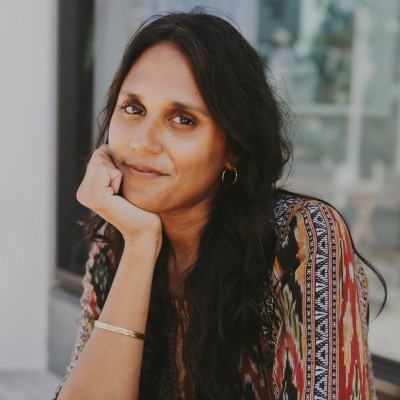
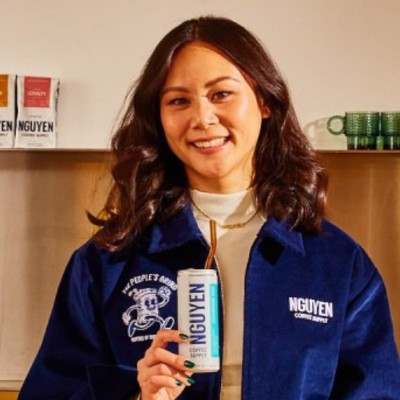
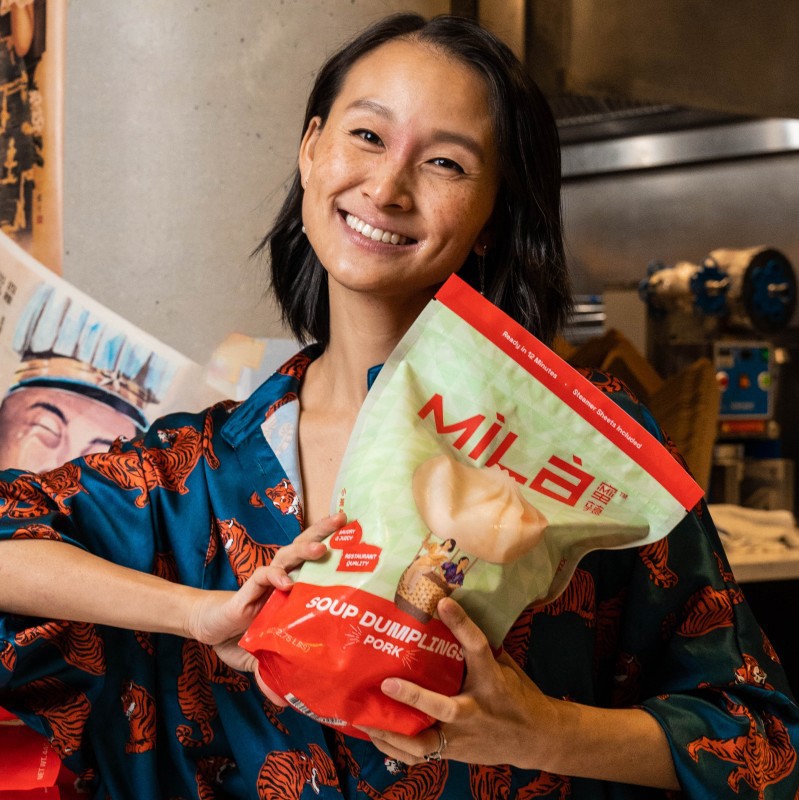
The question was asked by Kartik Das, founder of Doosra, and joining us in discussion are Nguyen Coffee, Brooklyn Delhi, DayDayCook, and MìLà to share thoughts on audience segmentation, tapping on conventional channels, and how to educate consumers, investors, and retailers without unlimited resources.
Please enjoy.
Today on Community Call, we are tackling a very timely topic, especially in the wake of Sieté's successful acquisition, and that is, how do you scale a globally rooted brand without losing the cultural significance that inspired you to start in the first place?
This is a question that Kartik Das of Doosra so smartly asked.
This inspired our Community Call, and to answer that question, we brought in an all-star panel.
We have MìLà, Nguyen, Sarah, I'm sorry, I'm going to get as close as I can.
Nguyen Coffee Supply, Brooklyn Delhi and DayDayCook.
Thank you all so much for joining us.
Kartik, let's start off with you.
Please give us a background on Doosra itself, and why are you asking this question right now?
Thank you, Melissa, and thank you everyone for joining today.
My name is Kartik.
I'm the snack maker here at Doosra.
Doosra is a company that makes modern Indian snacks.
We're trying to bring our Indian snacking culture, which is prevalent across the country and the continent, to the American snack out, where unfortunately right now, it doesn't really have a place.
If you think of chai as Batman, the snacks are Robin, and unfortunately Robin's getting left behind.
We're trying to bring him to the show.
The reason I'm asking this question is, a lot of times when you're talking to either a retailer or a customer, you're trying to explain something that's different, and very often the beauty of what you're doing is the fact that it's different, but conveying that message is often quite challenging.
And so, I wanted to talk to folks who've done this quite successfully and therefore that Rockstar panel here today to get their advice on how they've navigated those challenges.
Thanks Kartik.
Let's meet our panel.
And when I introduce everyone, we're going to ask to hear your brand proposition, of course, but also please share what your fundraising decisions were.
So whether you bootstrapped or raised, and then when in your journey you applied those decisions.
I'm going to start off with Jen Liao of MìLà.
Jen, thank you so much for being here.
Thank you so much for having me.
My name is Jen and I'm at MìLà.
And we are building a company that has frozen Chinese food, and we would like to share that with as many people as possible.
About the fundraising, we actually started as a restaurant in 2018, and we had done kind of like a small friends and family.
Angel Investing Round then, it's a separate company to kind of what we have as the larger MìLà company now, but just to go with where we started from.
And during COVID, we had started the e-commerce side and bootstrapped that for about a year and a half.
And then after that, we took in two and a half fundraising rounds since.
Sarah Nguyen of Nguyen Coffee Supply, let's hear about you, please.
Hi everyone, I'm Sarah, my company's Nguyen Coffee Supply.
We are a specialty Vietnamese coffee importing and roasting company.
Started, launched online in late 2018 with our bags of beans.
And in 2023, last year, we launched our Ready to Drink line.
Our mission is really to share the bold flavors and energy of Vietnamese coffee.
Vietnam is the second largest producer of coffee in the world, yet really had no presence or visibility in the US market.
So we want to bridge that gap.
In terms of my fundraising journey, when I first started, everything was self-funded, bootstrapped.
And then since 2019, 2019 was when we started our first Friends and Family Round.
It was about 200K on Convertible Notes.
And since 2019, we pretty much raised like small chunks here and there on Convertible Notes.
And so raised to keep growing, but we haven't done like a large price institutional round.
Thank you, Sarah.
And next we have Titra Agrawal.
Please tell us all about Brooklyn Delhi.
Hi, I'm Titra, founder of Brooklyn Delhi.
We make premium Indian pantry staples and basically condiments, sauces and meals now.
And we are self-funded.
So I'd say, but we do take loans out from banks.
And we also, I guess, use credit cards.
Thank you so much.
And Eric Strickland of DayDayCook, if you could tell us about DayDayCook and then how you view fundraising in this sort of situation.
Great to be with you all.
So DayDayCook, as those of you who may or may not know, actually had acquired three brands over the last year.
So Notalem, Yaes Thai and AumSum.
So my last three years mainly were at Yaes Thai, where I know the co-founders, Leland and Sarah had bootstrapped way back in 2016, 17, but then raised through different investor partners over the years to be able to kind of get to where they grew to late 2023.
But speaking of different ways to raise, they eventually did the strategic acquisition with DayDayCook.
DayDayCook, those of you that don't know, really kind of built their business in China in a way of a lot of direct to consumer content and had really eyed up expansion.
But taking just DayDayCook name into the US market and trying to kind of do products that way was really a hard progress.
So I think what they started to see is, hey, who out there has really authentic, easy to use, but also convenient Asian American cuisine that we can kind of go do strategic acquisition?
So for a lot of the brands that you guys now see under DayDayCook, those brands really looked at it as there was a capital component to that acquisition to be able to kind of on the other side leverage operational efficiencies, hopefully, economies of scale.
So a little bit different than obviously all the other great brands that are here, but still nevertheless raising capital and finding ways to pay for all the things that obviously are involved in this crazy business.
Great stuff.
Thank you, Eric, and thank you to our entire panel.
Kartik, I am going to hand the floor over to you to ask your questions about how to appeal to those three stakeholder groups that you outlined, the consumer, the retailer, and the investor.
As you said, there overlaps.
Each group requires distinct communication, especially when you're growing a culturally-centered brand that may lack a clear category and also requires education.
Kartik, the floor is yours.
Thank you, Melissa.
When you think about conveying a value proposition or telling a story, rather, I'd like to start with the customer first, because at the end of the day, they're purchasing the product.
Telling any brand or product story requires identifying that audience and speaking to them.
But with something cultural, I think you have three groups you've got.
The folks who are traditionalists.
For those to whom what you're offering is very interesting part of intrinsic part of their culture.
They're familiar with it, they're traditionalists, they know what they're talking about.
Then you've got folks who are familiar with the product, but are not of the culture.
They are fans of either a part of the world, the type of food, the cuisine.
The third is folks who have got no idea what you're talking about.
Very often, you're trying to pick one or talk to all three and it's always challenging.
I'd like to start this part with Chitra and Jen, and then Eric and Sara, if you've got stuff to jump in, definitely go there.
Achar and Xiaolongbao have three very clear audiences.
I'd love to hear from you guys about how you thought through who you were talking to first, and how you communicated with them through your messaging and packaging without having to dilute or dump things down.
For us, it is about how do we create the best product possible that is authentic to us that we believe is authentic to us and starting from that standpoint.
From the very beginning, our standard was basically, let's create a food that my mom will say is really great, that my grandma will say is really great.
They're not necessarily saying, this is exactly how I remembered it, but they're saying, wow, this is so good, I would purchase this.
And that was our bar and our threshold.
And naturally, that does have to appeal to that audience, and it can appeal to a wider audience as well.
But we've always gone by that of, how do we stay authentic to ourselves as Chinese Americans?
And so then it's not necessarily traditional Chinese food, and it's not American food.
It really does represent us and how we've grown up here.
I think also this is really, we talk a lot about this in education on different platforms.
Like Instagram has a lot more of our natural audience that already purchases from us.
TikTok is a lot more discovery oriented and might be a lot more newer people who don't know our brand, for example.
And retail definitely is, the majority of people have not heard our brand story or know who we are at all.
And we went through a rebrand from Sheltzijit to MìLà.
And I think that was the most representative of what you're saying of different audiences reacting differently.
A lot of people were like, Sheltzijit is authentic, MìLà is not.
You're gentrifying, you're kind of whitewashing it, and you have investors, no wonder.
And we're like, this is what we were going to name our daughter.
And it actually means sweet and spicy.
And we ended up having a son, so we gave this name to our company.
And here's why we were going to name our daughter this, because then she could choose anything she wants to be.
It doesn't have to be defined by anything.
And it is something in Chinese and in English.
And that did pretty quickly kind of shut down the conversation, but it worked because it came from us and us being authentic to how we were going to do it and not just like, oh, how do we pick a name that randomly works?
For us, for Achar, it was that we knew that, of course, South Asians know what Achar is.
But the majority of people that say, you know, I would go to a farmer's market, didn't know what Achar was.
So we just had to kind of prepare ourselves to educate the majority of people that we ran into.
But I do think that for Brooklyn Delhi, since it's like the name Brooklyn Delhi, I mean, like, as it suggests, it's like a blending of cultures.
So I think what we were bringing new to the table for everybody South Asians or people that were not, did not know what achar was, that I think the recipe development piece of it was this way to show people how to use achar, but not just in a traditional way.
Because it's like, you know, we didn't want like South Asians to just be like, oh, well, achar, you know what I mean?
Like, that's just something that my mom or my grandmother makes, you know, but there was something different about our achar because it's 75% less sodium than the achars that you find in the grocery store.
So I feel like there are certain messages that actually can work throughout all of the audiences that you're speaking to.
So I think like it's more about thinking through those messages.
But to some degree too, it's like, if you're also like, when you're thinking about your product, you should also think about like, who is your target?
Because in a sense, if you have too wide of an audience, then it kind of just like, the message just gets a little bit dissipated.
So like, I think to start with, you should begin with who it is that you're trying to reach and then craft that message for that audience.
For us, it was mainly like foodies, people that were really interested in just like, new ways to look at condiments or looking for new condiments in general.
I really appreciate that because I think one of the challenges I had is I had a preconception of who that audience was, and after six to eight months of showcasing our product, it's wildly different from what was anticipated.
So it's understanding, okay, did I focus in the wrong area and do I have to adjust, or do I continue my same messaging and we're going to be naturally reaching a larger group of people.
So I appreciate that.
I'd love to get a sense of the packaging because I think for both of you folks in the Condiment Island in the freezer, you've got seconds for folks to react to something and you're conveying something that's quite traditional.
How did you think about messaging on pack to showcase that you were traditional yet different?
So for Brooklyn Delhi, so my husband who's my co-founder is a food packaging designer.
So in that sense, I had a little bit of an advantage because he understood that there are certain things that you kind of have to communicate on a shelf that there's a hierarchy of what you need to communicate, right?
So for us, it was just that knowing that the majority of people that were buying these condiments in general, specialty stores may not know what a char is.
So we had to put an emphasis on kind of like that descriptor of what a char is, but then below it, we used a band basically that had all of the different ways that you can use a char.
And so that became a way to kind of like use space very wisely in a sense, because we didn't have a lot to work with.
But it's like, okay, a char, you can put it on a sandwich, you can put it on a soup or things like that.
And that was a way to quickly just like let the customer know, oh, okay, I can put it on that and I can put it on this, because you just have such a small fraction of time for people to just like get it right away when it's on a shelf.
Sarah, I wanted to go to you on this similar question, because for you, you're taking something that everyone is familiar with, right?
You're talking about coffee as an interesting, intrinsic part of culture, of everyday culture here.
How did you convey differentiation with that packaging?
Yeah.
Well, I think it really helps that the company's name is My Last Name, which is also the most popular Vietnamese last name in the world.
I think something like 40 percent of all Vietnamese people globally have this last name, so that was a pretty intentional decision.
However, I actually have been learning that it's not enough actually to, I assume that when people would read this, they would interpret Vietnamese.
I think there is a large population who do interpret it that way.
But actually, now that we are entering retail, we're reimagining all of our packaging.
Because when we started, we were just to consume e-commerce exclusively for four years.
In the last 18 months, we've really grown into retail distribution.
And designing for DDC and retail, it's completely different, right?
So what worked on DDC, where you have so many more touch points and so much more real estate to tell that store and educate, it's simply not translating in the way that we had hoped for on retail shelves.
So for us, the way we think about like designing packaging for retail, it's really like, not just like what looks and feels great for the brand, but it's like, how are you communicating your differentiation and how are you communicating the value props that drive decision-making in retail, right?
And so part of that is understanding, not just what you love for a brand or an aesthetic, but like understanding how do consumers in your category make decisions, right?
So for example, one of the things that we're learning about with the packaged coffee category is, you know, we started out as single origin, direct-trade specialty roasters.
So a lot of our packaging information on that, on the label relates to that, like the origin, the species, the tasting notes, et cetera.
But now we're seeing that when you're on shelf, people are kind of looking for like medium dark roast.
What are flavor profiles, right?
Does altitude or elevation really communicate anything about decision-making?
Not really, right?
So that has been a big learning curve for us.
And in terms of like the aesthetic of like balancing education with culture, I don't know, I had somebody question our packaging recently, and they were like, is it Asian enough?
They're like, it's really bold and minimal and beautiful.
And they're like, is it like Asian enough?
This person was not Asian.
At the end of the day, I think it's really, when it comes to that aesthetic, our intention was, I think it's clear that we're a Vietnamese-oriented brand with the brand name, but our design aesthetic has always been really bold and minimal because we want to be accessible and approachable to a really wide audience.
And whether or not you feel like you need to make it like really, really ethically designed forward, it's up to you.
It's all about what brand you want to build.
Well, those are some of the key learners you had around packaging.
If I may add one more thing, though, to your first question, Kartik, a really key learning point for me was like, when I first started, and I think a lot of founders who built within culture, everything I was sharing was about why I wanted to start the company, but why I thought it was important, but why I loved to eat MìLà Coffee, right?
Then when it's your friends and family hyping you up, anything works, so they love you.
I think when you grow, it's about if you're truly creating value in the world, how are you really delivering value to your consumers or to your audience?
Part of it is understanding what is important to them.
Once they start to understand what is important to them, that was where the telling the story wasn't just about what I wanted, but it's like, I understand what's important to you, and here's how we can find that bridge through food and beverage.
One year into retail, very similar things to Sarah where it's like, okay, we chose certain things, certain decisions because of D2C, and then we wanted that to translate to shelves to capture people who already knew the brand.
Then now that we're on shelf and it's mostly reaching people who don't know the brand, how are we communicating these value props in a stronger way?
It's even something small like we decided on a red stripe so that it was consistent and bold.
Then now that we have this color-black hierarchy, we're like, we can't fit the information we want to onto the package, and it's not as simple as just like, why don't you just move this over here?
No, you have to change the entire packaging for that to even happen.
And then probably our logo needs to shrink.
Like that just happens as you get bigger because people don't care about your logo or your name.
It's about the product that you're selling in a retail shelf.
And I think, Sarah, kind of to your point that like what you want versus what the consumer wants, this actually just happened to us.
We launched potsticker dumplings in Walmart.
We called them dumplings.
I was very adamant about it because I'm like, dumplings are the broader category.
Ours are meant to be boiled.
They're Chinese dumplings and they're not Gyoza potstickers.
And so we didn't want to go with potstickers, but people just know potstickers.
And soup dumplings is a new category.
How are you differentiating what dumplings are versus soup dumplings?
And it's just like this whole trade-off of like what you really want to be disciplined on and like hold your ground on and be dogmatic about versus what do people know.
And you have to stay on shelf for it to like matter at all.
And so there's always this tension, I think.
Eric, I think this is a perfect segue because you're in this position where you're coming in and you're telling stories that these founders have brought through and you're conveying it.
So how do you take that message and convey it to a customer?
And you've seen it across three brands now, right?
Who have slightly different value props.
I'd love to hear your thoughts there.
Yeah, thank you.
I think what I try to do best is sit next to the founders and show them the data, right?
Or just be a person from a different side of the beach ball to kind of say, hey, as a consumer myself, when I walk to the shelf, this is my perception of things.
And hopefully that gives them a little bit of window into outside of the founders head space, right?
How that's viewed.
What I can say, especially thinking through, whether it was working with Vanessa and Kim at AAMSOM or Lila and Sarah at Yaai's Thai was, you have a global flavor set or an Asian set where a Thai curry is being thrown in, and everybody associates curry with Indian, not Thai.
And there are flavor profile differences and there are little nuances.
But to everybody's point, you only have so much space to really like pull the consumer in and say, oh, hey, I want to try this.
And then the taste from there is really, I want to go back and try it.
So I think the biggest messaging was, hey, Leland and Sarah and guys, I really leaned in a lot of the times and really went authentic, right?
They came out with a Massaman and a Penang and a Peking curry.
Well, the more deeper they went in authenticity and naming convention, a lot of the times they lost that consumer with, right?
It's like it's very hard to exist on a Whole Foods and a Walmart and a Target shelf, have the same branding, the same messaging and have the same velocities.
So, what I found a lot of the times was the more we kind of went a little bit closer to category convention, as painfully as it is to admit that, you kind of saw better velocities.
And a lot of the times it was maybe having a survey monkey or doing something where you asked the general population or people that already loved your brand, you know, to everybody's point, Jennifer's point, even Sarah's point, is ask those questions out to your consumer base or even new consumers as you're demoing, right?
Because when you have those opportunities where people are tasting the product, you kind of have that live almost like qualitative, like survey that you can do right there.
But what I found sitting next to a lot of these founders and showing them the data is items that we thought were super authentic, really pulled the consumer in, really gave them that authentic either, whether it's Vietnamese with the flavor profile with Bòm Sòm or whether it was Thai with Sarah and Leland is like if it went too authentic, we kind of lost consumers.
So you kind of had to update that branding and update that messaging.
It was funny.
It was like red, yellow, and green curry really resonated.
Peking, Massaman, and Penang were like, people were like what?
They were almost not as comfortable to try those sorts of things.
So that's not to say, hey, shy away from being authentic, just be like private label boring.
But I think it is sometimes one of those moments where you kind of need to look in the mirror as a founder and say, hey, what's going to set me up for success at the shelf?
So that to your point in those 15 seconds or whatever, you have to convert someone and drive trial and kind of get a new household to try your brand.
If you lean into authentic, sometimes you can lose and confuse consumers and then obviously it's not going to sell.
So this is where I struggle and I can imagine all of you were there at some point.
The challenge, and that's why I went back to the audience question is if you're trying to reach a larger audience who has no idea what the product or the concept is, then yes, there is an adjustment of naming convention that needs to happen.
But when you start out and you're building that base, if you try to go, and I'm going to use this word, I don't mean it in this way, a little more Eurocentric in the way you're naming things.
Do you lose your original customer?
With Chen, when you move from Chao and Pao, or to not call it dumplings and call it potstickers, is there a challenge with what is already your core customer who loves and has championed your brand at the start and how you navigate that?
I think for the dumpling versus potsticker, we ran a lot of tests to get to this point.
We ran e-mail tests, ad tests, landing page tests for dumpling, potsticker, dumpling, and potstickers, and they convert about equally well.
I would say potsticker, dumplings, and potstickers worked 20 percent better than dumplings, which is still pretty close in range.
Then it just became a question of like, okay, but dumplings isn't working in retail, and we know that potsticker, dumplings or potstickers work better.
And for those like surveys that we did for our customers and for our landing page and emails, when we did do potstickers, there's no pushback.
So I think some of it is sometimes in your head of like what people care very, very deeply about and feel like is authentic and it's on balance, right?
So we're still going to educate people about it.
That's my compromise is like, okay, we're going to talk about it in our social media, our organic content, on emails, like what's the difference and still continue to educate, but that doesn't mean that the audience is already there and ready to do it.
Also, this is such a silly example, but we did Coachella the last three years.
And one of the years we had spicy dan dan noodles on the menu and we had zhajiang noodles.
It's a Beijing noodle.
And the first day it was 150 portions of spicy dan dan noodle that were bought and 20 of zhajiang noodle.
And it was just people who couldn't eat spicy.
And then the second day we changed the menu from spicy dan dan noodle.
We kept that, but zhajiang noodle, we changed to sweet and savory zhajiang noodle.
And it became 100 versus 90.
So it became way closer and more people bought noodles.
And it like, I think it was just about the flavor profile and people understood it immediately.
But you could still keep zhajiang noodle in the name.
It just wasn't the first thing for people to understand immediately what they're getting.
So I think there are these trade offs and it is a personal question of like, what are you comfortable with in the trade off?
But there are many places to continue to tell the story and you don't have to say like, oh, I'm totally giving that up in doing this.
That's really fair.
I appreciate the counter there.
I know Sarah and Eric over the last 18 months, you guys have built this incredible sales and distribution operation at retail.
So a retailer often sees a trend about something of the culture and gets excited, but might not fully understand why it's top of mind.
And if a retailer isn't aware of the cultural relevance, the question often is, where does this go?
So you've got placement issues.
What should I remove so you can have space in the shelf?
And what are you going to do to help move product?
So there's an understanding for that they need to be comfortable enough with.
And as a small brand, having the data and the understanding of what strategies are effective in those areas are pretty challenging.
So I'd love to get your thoughts on how you help a retailer get comfortable with a new product and what are placement and philosophy strategies that have been helpful for you?
Well, I mean, in a lot of ways, it's never the same for one brand as I'm sure everybody in this call knows, right?
Because you have whether it's frozen or snacking or beverage, right?
There's a lot of limitations depending on the retailer that you're looking at.
There's everyone always comes to every brand, right?
Oh, I got space constraints.
I can only give you one facing of one skew.
And so I think a lot of the times when you don't have access to the data, right?
Or you don't really have sort of some big expensive study that you can do and say this is the perfect place.
There's a lot of leaning on kind of those demos as well as understanding that sometimes it is those boots on the ground in the beginning, depending on where you are, obviously, if you're frozen or if you're beverage, you know, depending on if you can kind of sit on the shelf, shelf table, you have some limitations.
But in my experience, and I've been in sauces for a very long time, right?
Like Titra as well, where you kind of have a little bit of, if you get in too many points of distribution, it's harder to execute that testing to find out what works.
And what I would say is when you're in the beginning and you have maybe a smaller sample, maybe you have a 50 location chain or even smaller than that, you just have a few local independents, that's the time to really, I think, get in those stores and really kind of understand what makes your velocities increase versus not.
And I'll use an example way back when I was in refrigerated salad dressings, organic premium refrigerated salad dressings, right?
We got thrown over in a retailer that we all know into this area called Nature's Marketplace next to Sauerkraut and Pickles.
And we were a premium salad dressing.
And so you're like, great, this is perfect.
And then you kind of say to yourself, well, I don't think that's where we belong.
I think we could sell better.
So I went into one store and I negotiated with the produce department to give me some flex space where they put like guacamole and apple cider and just like said, hey, for a weekend, can you order in a bunch of other cases?
And I'll put it in there.
I'll come in and do it.
And let's just watch what happens.
And we went from selling like three or six units to selling 80 in one weekend.
And so I took that with pictures and everything and went back to the category manager.
And I'm like, hey, you have us plan a grand problem, right?
Look at what kind of dollars we can drive and velocity we can drive.
If just we make a small tweak with where we are in the source.
And so that's obviously refrigerated salad dressing and worked in that case.
But I would encourage you while you're small and you're growing, especially in sales, I was always not afraid to go in stores and kind of have that merchandising like boots on the ground.
It's like this is a recording, but I'll still say it anyway.
There's a lot you can get done in the store without having to pay for an NCAP.
If you just go in there and kind of build relationships at the store level.
And I think sometimes if nothing else, you kind of are able to kind of test and experiment as to, hey, did that really drive up more velocity or did that not really work?
And then I can kind of have those higher level conversations.
But my charge to you always is be scrappy and do it on a smaller scale.
So that by the time you grow into more points of distribution, you kind of already know what works and what doesn't.
And it's not overwhelming that now you have 400 doors, that now you have to execute something like that off of.
Good question for Chitra here.
So I think with a jar, there isn't really an immediate like, because you're not really a pickle, even though that's literally what a jar is, and you're a condiment.
So how do you have that conversation as like, okay, we need to come in on shelf and take somebody else's spot.
What, how are we different or how are we similar?
And how do you have that conversation with that retailer?
Right.
I guess for us, it was that a lot of times retailers, like the buyers will look to see what they don't have in their set and put it in.
So because we came out calling it a jar, there wasn't another brand, right?
So which worked to in our favor because we would get on the shelf, but it also worked against us because consumers didn't see other jars on the shelf in a sense, right?
So we had to build our own demand.
And so that's another thing that you should be cautious about, is that as a brand that doesn't have as much funding, building demand for a new product takes a lot of money and manpower.
So even in the beginning, I remember we had met the global buyer for Whole Foods.
And at that point, we were just kind of like a featured local vendor for the achar.
And they really loved the achar.
And they were talking to us about, oh, we would love to take this national, right?
And that gave me heart palpitations because I was just calculating in my head how much it would cost to put just one demo in each Whole Foods store to demo the product.
Because in the beginning, that was kind of how it sold, is that people tried it and then they would buy it.
But we found that in a lot of stores where we weren't demoing it, it wasn't selling because people didn't know what it was.
And so I think this goes back to the conversation about channel strategy, which is also that there's a lot of different avenues that you can take when you have a food product.
It doesn't always have to be a grocery store.
So with the achars in the beginning, by chance, I had taught cooking classes at Brooklyn Kitchen, and there was a person that worked there that went over to be culinary at Blue Apron, and she knew the achars.
And we struck up a conversation about, oh, well, the achars would actually be a perfect product for Blue Apron customers because they're looking to discover something new.
And Blue Apron Culinary wants to kind of surprise and delight their customers, but they also want to be innovative in how they use new condiments or products.
So instead of launching nationally with Whole Foods, with the achar, we took it to Blue Apron instead because we wanted to build demand for it, and we wanted to build the education, but at the same time, we were getting paid for it.
So that was a way where we were able to have achar be in millions of homes where people saw the brand, they saw the product, they understood how it tasted and how to use it, and then they would go to our store locator to see where they could buy it.
And to this day, there's a crazy amount of people who have become knowledgeable about what achar is through the blue apron boxes, because we continue to do it.
So that's just another way to look at it, and not to be in a rush to put a product on the shelf that may not be where consumers are, and also to trust your own gut.
And if you do have research, which we didn't have, but I just knew from my own experience, from what was happening on the shelf, that it wasn't our time to launch the product to shelf.
Because sometimes the buyers are excited about a product, and they want to bring it in, and it may not do well.
And so that's another thing that you have to think about.
They don't always know.
That resonates because the whole idea is like, like Eric said, I'm a one-person stock show.
I'm in every store doing every demo, talking to every customer that comes by.
But I think what would be, I think quite practically helpful.
Sarah, I know Brian and your operation team, you guys are scrappy as hell.
We'd love to know from each one of you, what are a couple, two or three, like little scrappy initiatives that you guys took when you were small, first, call it 6, 12, 18 months, that most people won't think about.
Like the blue apron is a left field that you don't see in a standard CPG playbook.
We'd love to get what worked for you, whether that was in-store or scrappy side deals.
I'd say one thing that we did in the first year was, we did a lot of pop-ups, which I still love to this day.
I think pop-ups is such a powerful way to really build momentum, really connect with the community, get learnings, build buzz, generate media.
It's not super scalable, but I think where you can, I think pop-ups and experiential is very powerful.
On the retail front, agreed with everything you're saying, Kartik and Eric, being in-store, building relationships on the store level is super powerful.
We've never paid for an end cap and we've gotten incredible secondary displays all day.
And that's all been through relationship building, in-and-out stores, selling in extra cases before promo period, et cetera.
Yeah, and sometimes you want to incentivize the store leaders, that's not uncommon, it's not terrible.
Whether you give them some merch, a gift card, I think all those things are on the table.
And then to kind of wrap it up with just kind of like how to help retailers understand the product.
I think for us, it's like, I think like some of the macro like trends and data points around like brands within a heritage, I think those are kind of compelling starting points for buyers.
However, what really helped me was when I started to really listen to the buyer and just kind of try to understand from their perspective, like what is important to you?
What trends are you seeing?
What's working, what's not working?
What do you feel like is like the lowest performing area and you're set?
Cause it's really about finding that win-win of like not just how do we get in show to drive sales for us, but it's also like how do we help them expand their category, expand their scent to drive incremental value.
So part of that is differentiation, but also it's kind of like really understanding from the buyer, what is valuable to them and try to find like where you intersect there.
So I wouldn't, I don't have any scrappy ways that we did it that work that I would share.
We did Coachella and our corporate team staffed it, and everyone had to take three days off after because they were so tired from running the booth, but it didn't actually have sales lift and it didn't really do that much better.
So don't do that if that's what you're looking for as a strategy.
But I guess I was scrappy.
One thing that's worked really well for us though is we did Costco road shows.
This is typically a money-losing venture for a lot of companies because it takes a lot to bring a team, demo it, give out product, staff it the whole time.
And if you don't make enough sales, it's definitely a loss later for this, but it's trial driving.
We were very lucky in that we were able to make it profitable for our road shows in and of itself.
So we did set global food and sundries records for all of Costco.
And it became a channel that we can do even for sales that is sustainable.
But the road show itself is not really where people tend to go towards because it's very easy to lose dollars on it since you have to bring so much product and manpower to be able to do that.
Were there any things and tricks that you've learned from them that you think small businesses could deploy?
I think Chitra called it out, I think, really well in that just to circle back on that point, but also to echo some of the founders I've worked alongside is, sometimes you get either a fan or the perfect core consumer in a buyer that since they hold the keys, they can put you on the shelf, but it may not be your time.
And so even though they, you know, in that meeting, you feel like there's this really great partnership and they love you and you kind of have to push past that one-on-one in that meeting relationship and go, but do you really, are you ready for a product like ours?
What kind of velocities can you tell me, right?
And I know it's hard to go out there and just get a spin subscription IRI Nielsen and just be able to pay for all that right away, but leverage those category managers to say, what kind of data can you put in front of me that tells me whether an ingredient inside of ours right now is on the rise, or leverage rights and trials that you can use or some demos that you can use through some of the data platforms, to be able to kind of look into what is it about your product right now, I'm going to take a little bit of a break now because a lot of the times I've seen brands and brands that have been involved with right gained 600 doors.
And then a year later, they're decreased to 253 because what they didn't do is they didn't kind of test and make sure that like Velocity's warranted those full 600 doors.
And what they did is they went into so many doors that they actually had about 100 to 150 doors that really there was already data there that said that these products don't do well.
And just somebody didn't do their homework more on the retailer side.
So be very careful about at the end of the day, you're going to have to be the one that makes the decisions on where you go and who allows your product to be on the shelf.
But I think sometimes it is a less is more approach.
It's very tempting.
The Costco road shows are great.
Doing business with Costco is great, but it's very much rotational of like you're only as good as your last rotation and how many dollars per warehouse per week you did.
But the road shows certainly prop that up and allow you to control rather than like a CDS demo person that you didn't train.
I think we've all been there where you walk up and you're like, what's this?
They don't even talk to you.
They do a fantastic job for the most part, but when you have your own team there and you're running those demos, it changes the ballgame.
What I would say is back to the founders is what had been common across a lot of the founders from Nona at NonaLim, Leland and Sarah at Yai's Tie, Kim and Vanessa at AumSum, and even the brothers that I work for at The Salad Dressing.
It's like investing in those demos and maybe even merchandising and just being very scrappy in the beginning to sell the product in, make sure people taste it, replenish, repeat.
If you get that wheel going early on, you avoid some of that guessing game that I think a lot of brands struggle with, or there's going to be a lot of investment.
There's a lot of temptations to do all of these different promos that are an ROI and all that stuff.
If you have a great product that you believe in, make sure that you find a store that you can sell into or stores, sample it, find a way to get it in people's mouths, have them fall in love with it like you know they will, and then just repeat that over and over.
Because all of the founders that I've worked with, anytime that they've been like, I did a big book and a circular and this and this, and all these people love it, and my velocity is I've never heard that from anyone ever.
It's always been, hey, I demoed, I ran into somebody in the store, and I bought them a can, or a lot of that building is really not sexy, and it's not exactly like this blueprint of it's going to work for everybody on this call.
It truly is just like those serendipitous moments, mixed with knowing that if people taste your product, they're going to want to buy it once, and they're going to come back for it.
Maybe one quick additional thing is, it does feel like every buyer and every retailer is very different, and maybe understanding their strategy, and I think it does have to be matched with like time is right, where the demand is there and the supply is there, and that has to converge at the same time.
But like some retailers, they see that the market is there, and they want to bring in a ton of different products, and they're not very disciplined about which products they bring in.
And it's understanding that like, oh, they're bringing in a set of 10 things of the same item, which did happen to us.
And so then like, how are you?
What's the strategy there?
Are you just trying to survive the first round of cuts and then after that invest in it, for example, to drive velocities?
Or is this the type of retailer and buyer that's like, oh, there's the market there, but I'm investing in only one.
And sometimes, if you miss that window, where they only want to invest in one, and that one works, then you don't get to go in afterwards.
And I think it's like truly deeply understanding what is their strategy as well, and the timing of that to be able to push or pull back a bit.
Yeah, I appreciate it.
I think what I'm taking away from it here is there's a lot of understanding people, and people on very different levels, at the different parts of the chain.
And so I appreciate that.
I think all of us on this call know that it's a lot of hard work, and you're a little crazy for doing this, but that's part of the beauty of it.
When you talk about investment and investor decks, the question always comes up, what is the total addressable market?
And as a former investor, as a hedge fund, I think that's a partially ludicrous question when it comes to something that is different, that doesn't have an inherent place on shelf yet.
How do you think about what is a reasonable addressable market?
How you can then stretch that or have that compilation in a way that you believe it, rather than something that an investor wants to hear?
Our total addressable market isn't being these coffee, it's coffee.
Because these categories are generally growing year over year, I always argue like, what is the category that your snacks play in?
It seems sounds like it's snacks.
And then just you can argue that your differentiation, innovation is part of driving that growth.
We talk a little bit less of the absolute addressable market and almost more like relatively speaking, what is the need to believe.
And so for example, Chinese restaurants are 8% of restaurants and total dollar spent in the restaurant industry, but 2% of frozen products are Chinese products.
So theoretically, there's a 4x opportunity to grow.
If you are looking at those types of numbers.
And then we just do relative things like that.
Like, okay, DayDayC, here's what we're doing on DayDayC, and 95% of shopping happens in retail.
So theoretically, you could 20x from what your DayDayC is.
So it's things like that.
But then using data to support that, where in the very beginning, for example, we ran tests where we 10x our ad spend and our tax stay the same.
And so it's like, okay, we haven't hit our ceiling, even if we spend 10x from here.
And showing those tests to be able to support what we are saying, there's a larger market than where we are right now.
That was fantastic.
That really helped me.
Because the approach that we're taking also is understanding the US.
Indian restaurant industry size, right?
That's almost $5 billion.
And looking at where Indian food spend is in grocery as compared to a larger restaurant scene is very helpful.
So I appreciate that.
Well, folks, not only thank you for this call, but I'd like to say thank you for putting cultural products in spaces where people are having the opportunity to try them, because that gives folks like me, folks who are coming up in another 12 months or 18 months, the confidence that they can walk into this space and actually showcase something that's important to them.
So I really appreciate you for that.
With that, I'm going to hand it back to Melissa.
Thank you for making this a possibility.
Kartik Das of Doosra, thank you so much for asking this question and asking such very specific and perfect questions to help draw out all of the information.
So thank you so much.
And then to our amazing powerhouse panel, MìLà, Nguyen Coffee Supply, Brooklyn Delhi, and DayDayCook.
Can't thank you all enough for joining.
That was fantastic.
That concludes another episode of the Community Call Podcast.
If you've enjoyed this show, please give us a review and follow us on Apple Podcasts or your listening platform of choice.
To join Community Call live on Zoom, go to bevnet.com/communitycall to see what's coming up and register for upcoming shows.
And don't forget to join our BevNET, NOSH, and BrewBound Slack Community at slack.bevnet.com.