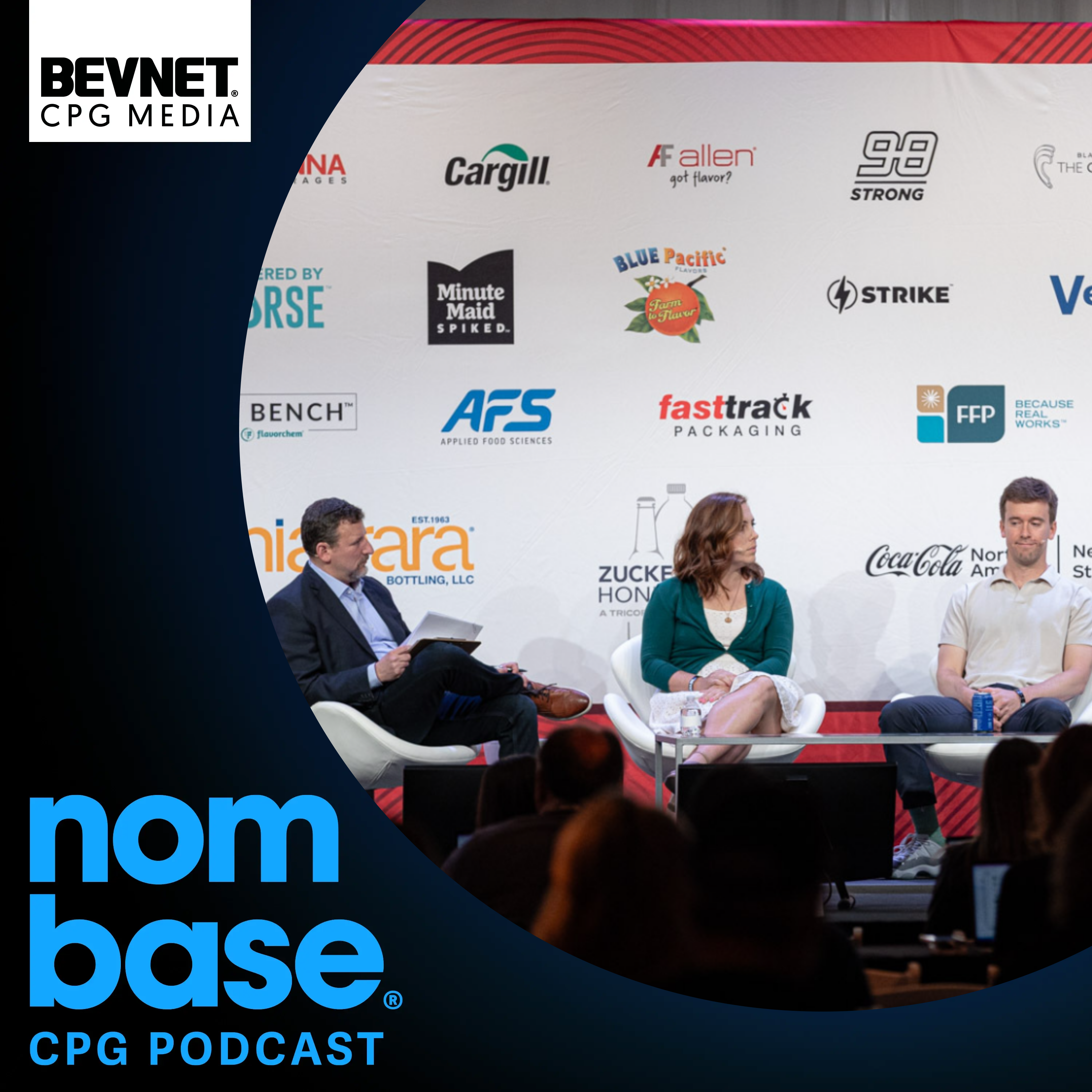
Hello, and thank you for joining. I am Melissa Travers, Director of Community here at BevNET Inosh, and I am pleased to welcome you to The Nombase Podcast. Don't forget to check out nombase.com, BevNET's platform built for the CPG community.
It's where you can find episodes of this podcast and so much more. Today, we are talking about data, specifically the data investors and acquirers really want to see and how brands can use it to tell their story.
From early fundraising to preparing for a potential exit, understanding how to collect, interpret, and present your numbers can make all the difference. Today's conversation is with two experts who know this topic inside and out.
Edrico Reina is the founder of Beyond Roots Growth Partners, an advisory firm that helps emerging brands use analytics to grow smarter and scale faster.
He brings deep experience from his time at Spins, where he worked closely with emerging brands on their data strategy and go-to-market execution.
Also with us is Taylor Urlich, an associate at Whipstitch Capital, an investment bank specializing in better-for-you and emerging consumer brands.
Taylor works on both capital raises and M&A transactions, helping brands translate their performance into investor confidence and deal readiness.
Together, they will break down how to get investor ready, what metrics really matter, and how to turn raw numbers into a narrative that resonates with the people who can help your business grow.
Taylor and Edricco, thank you so much for joining this conversation. I think this is something that all the folks out there are dealing with every day, whether they're in the middle of raising or not.
Thank you so much for joining the Nombase Podcast.
Thank you for having us.
1:56
Well, Edricco, let's start with you.
We started talking about this when you were over at Spins. You have had a front row seat in helping brands use data strategically. Why is this understanding and presenting data such a sticking point with founders?
You know, everyone has that great story that you can tell about why you created a brand, why it's important to you in your life.
But that is always just maybe it's just a story at the end of the day. If you don't actually have the data to back up that full picture.
And that's what a lot of founders miss in the beginning because they're so into the storytelling, which is fabulous. We all love to hear it.
But at the end of the day, an investor or a retailer or someone who's going to make a bet on you wants to have that full picture and wants to truly understand, hey, behind the story, what are the data supporting that?
Taylor, now you're on the other side of the table. You are helping either with capital raises or with actual acquisitions. You see firsthand what happens with clear data versus messy data.
What do you find trips up founders the most in this process?
I think it totally depends on the brand and the founder. No brand is exactly like another one.
One thing that we always say when preparing to raise capital or for an acquisition, just a broader transaction process is that time is incredibly important.
Anything that a brand can do ahead of going out to market, whether that be cleaning up your financials, bringing in an advisor like Whipstitch Capital to help you understand your data, or working with someone like Edricco or Spins or Nielsen to get
access to that data, will help you streamline the process once you're actually out to market, because investors and acquirers tend to ask for kind of the same key things in the early stages of a process. So really doing the work ahead of time is
And can you explain what Whipstitch Capital does and what you do with Whipstitch Capital?
At Whipstitch, we are technically the largest independently owned investment bank solely focused on the consumer space.
We work across food and beverage, personal care, beauty, VMS and a little bit of pet as well. And essentially, we help founders with raising capital or eventually selling their companies.
The way that we do this would be, you know, really getting to know founders. We want to go out to market and be able to tell investors and acquirers your story and know all about your data just as well as a founder or management team would.
So essentially, we help take the load of the process off of founders will be the ones digging into the data, doing the outreach and having calls with investors and assisting with a lot of the diligence process so that founders can focus on actually
running the business. And then once we get further along into a transaction process where you might be getting offers or indications from investors or acquirers, we'll help you navigate negotiating that and make sure that you can get the best value
And Edricco, could you explain to our audience what you do at BeyondRoots and how all the time you spend at Spins has informed that?
So at BeyondRoots, we help ambitious companies grow from product market fit to additional strategy around go to market.
How do you scale and grow and leverage data to support that growth in the marketplace? So over my career, majority of time spent at Spins, I've helped companies go from go to market strategies to transition to a data-driven approach.
Most recently, we founded our financial services.
So the end of this conversation here is that I've helped over the last past 10 years to help investors leverage data to be more insightful on what brands are out there and then also did a lot of diligence work our team did in this space.
So we were first-handed sitting at the table with investors and understanding what are they looking at, what kind of data are they seeking for. Obviously, they came to us to look for that data and what worked and what didn't work for them.
So being able to leverage that solution to help brands continue to grow through channel strategy, go-to-market strategy, and just leveraging data to tell that story better to secure a more sustainable and growth business for themselves.
6:25
Can you explain what a smart roadmap to data looks like for brands?
So you start out, you're bootstrapping it, you're really limited in the amount of cash that you have to spend on data, and then what that journey looks like until you get to the point where you're a steady state and you do have more resources to
spend on data and you really should be spending money. What does that look like?
20 plus years and I've heard every story around why I can't afford data. One is it important for me to get data?
I look at it and usually talk to founders and brands and companies that I work with and say, listen, you want to go to the Super Bowl, you want to go to the World Series, you want to build a team around that, you want all the players, but you need to
know when to play those players. That comes with the data side. Each stage depends on where you are in your growth strategy, where you are when you're planning to go to market.
We hear a lot of folks saying, hey, brands that are under a certain size are hard to find capital. Well, what data set do you need if you're a sub $5 million brand today? How many retailers are you in?
I typically talk to folks and say, hey, listen, the best way to start off is definitely getting the vision of the landscape if you're early on.
It is worth the spend to say, hey, I need to understand my market, my channel that I'm in today that I'm focused on. It doesn't need to be broader, doesn't need to be in all channels and get this massive data set.
But you need to understand, am I even building for the right folks? Am I building in the right area? What is my stable foundation look like?
Am I launching in Southern California? Is that the right place to launch?
You don't know that typically because you're just kind of guessing and most founders I met are like, hey, I have a friend who knows a friend who launched this product and did really well and now I have this thing, but it's like not really data
backed, right? From that sense. And you're kind of just throwing darts of like, should I be at this retailer? Should I not be at the retailer?
So early on, and we'll take this as phase one, is it's worth the investment upfront to get a, I call it a snapshot ad hoc report of what does the market that I'm really focused on laser, not the big one, but like the laser focused market, where do I
stand? What's, who are the players? How are they performing? Can I meet those metrics that they're doing?
And how do, where do I fit in to the brands that are already out there today? So that's kind of where I would start. But you also have data internally.
And it's something I've talked about in the past with folks is that, you know, as if you're more emerging, you've been selling, you have a few retailer accounts, you have that kind of information already to understand, what am I shipping?
You know, how many units am I moving? What kind of, what am I getting in returns that are coming back to me? If you're selling online, you're getting, you're having some reviews, you're kind of understanding what's happening in the marketplace.
There's a little bit more out there today from where I started about 20 years ago with obviously TikTok and other areas to be able to get data Shopify.
There's a lot of things that you can bring in early on before you need to get that strong POS sales data, consumer data.
Could we go back to the snapshot? Where should folks be looking for that? Is that Spins?
Is it Nielsen? Is it IRI? Where do you look and what should you ask for?
Spins does a great job with that.
They cover a broad market. So if you think about the full landscape of datasets, Spins covers to the natural channel all the way to conventional.
And so they're a good starting point to look at and say, hey, how can I get a one-time report for the data? Or I've also coached and mentor brands to say, listen, maybe there's another way of doing this as well.
Spend a little bit more and make that investment into the data story and get some consulting work. I know Spins has a great consulting team. That's what I was on before, before I departed and started this.
And we can do some really great work if you just ask the right questions and they'll work with you and say, hey, here, what would you like? You like a sales story for my retailers and a sales story to help me kind of talk to my investors?
That is really the bang for the buck because you can leverage that in multiple spots. You don't have to do the work. Usually, you're a founder led company, you're tight on resources and time, you're wearing multiple hats.
That is worth the spend. Again, it's an investment in you and it's an investment in your future growth.
A lot of folks that when I talk to, they don't see it that way in Vietnam because they're just thinking as a founder, it's like, I'm burning cash, like, do I have money to spend this? I know the folks at Spins do a really great job.
NIQ, Surkana, others have POS data, they have similar stuff.
Taylor, how often do you work with brands who have invested in something like what Edricco is talking about very early on?
Pretty frequently. Brands come to us all the time and ask the same question of what data should I be getting? They might not have a huge budget and we suggest the same thing to them.
Spins is a great resource and there's different levels of what you can get from them like Edricco described.
I think we have come across a lot of brands that have a smaller data set or an earlier snapshot and then even throughout the brand life cycle as a brand starts to become more size and scale, they're still likely only purchasing a couple retailers or
There are also some players that you look at earlier stage brands or might have a market preview.
One comes to mind is an organization called Dash Intelligence. So if you're in the beauty space, they do some really early stage beauty pre-market views. It's scraped versus algorithms and some other stuff, but it's very, very close.
I've looked at their data, I've used their data. It is affordable when you're an early stage brand to get in and start leveraging that information.
So there are other companies out there and happy to explore those if anyone's interested in where you can find outside of Cirquely POS, some earlier stage level data sets as well.
Certainly helpful resources for the folks out there who are just getting started and really are so strapped.
12:27
Understanding Key Metrics
Taylor, what are some of the biggest data gaps that you do see in emerging brands? And how does that hold them back?
I think when it comes to data gaps, it tends, in my experience, it tends to be more so a knowledge gap than an actual access to data gap.
So what I mean by that is sometimes we interact with founders who, you know, maybe they don't fully understand their data, or they aren't tracking, if they're a direct to consumer brand, they aren't very closely tracking their CAC, their cost of
acquiring a customer, and looking at that versus their LTV or the lifetime value of their customers. So there are some founders that we've come across that may not be super knowledgeable because it is so much to learn in the CPG space.
And that's one thing that Whipstitch can definitely help close some of those gaps. But I've also noticed founders and management teams that really track those data and metrics and key performance indicators pretty religiously.
They're actually making business decisions early on about, okay, should we run this ad? Should we launch a new product? They're thinking about their strategy and how it will impact that CAC or that LTV.
And that ends up helping them scale potentially more quickly and more profitably.
So it sounds like what you're saying is not only is building a data story helpful for securing capital, but it's also really helpful in growing a strategic brand. And that's also really helpful in securing capital. So the benefit is twofold.
Exactly.
Edricco, so building a data story is incredibly important.
It's something I've heard you talk about a number of times. How should brands be building that as they scale? What's the data they should be recording and tracking?
And how should they be recording it as they grow so that they're telling a story and building on a story?
As we kind of earlier said, they have this great fundamental story around like, why did I build the brand? Right?
And so what you really need to start to connect in the dots is, I built this great brand because I have XYZ, I might have this health concern or I found this really great agreement that's not out there. That's awesome.
Now let's start to build out like, why did the consumers want it? Like who is your target consumer? Why is it important for them?
What are you bringing to that consumer that's going to draw them to say, hey, that is a need? So a big miss a lot of times is folks go right to like POS data without standing the consumer side.
And I know Whipstitch does, they've done a lot of work with them. They do really great job at figuring out like, all right, let's look at the consumer side of the data, right? Like who's purchasing the products?
Who are the market for? You also need that for retail sales stories as well, especially if you're a direct to consumer. Who's that consumer you're bringing to brick and mortar that's not already there?
And how do you drive more foot traffic? Which is also important to investors because an investor wants to know what's the size of consumer who has the purchasing power to buy that, buy your product.
You also need to understand the size of category that you're looking at. So like, is it a growth category within a store? Where are the price points?
Is everything a very high price point? So what is it gonna cost for you to operate your business? Is the category strictly on promotion a ton?
And you just have to promote a lot. That scares away investors and it scares away life. Because we all know that it costs a lot to continue to be on promotion.
You kinda wanna know, is there a base value that you're gonna get without being on promotion? And if that's high, and then you go on promotion and you get that bump, that's awesome.
Like, and you're getting those repeat buyers even when you're not on promo.
But if you're always have to be on promotion for your category or to get that trial, that's kind of a scary aspect, because you know it's a lot of money to play in retail already. To be able to continue to afford that is a lot.
So those two things that you want to make sure is like, who your consumer is, understand your target audience. Not saying like, hey, it's because I built this product in my garage, or my friends told me they really like it.
Truly understand, understand who that is, and where those consumers shop. And then understanding the category dynamics before you jump in. Pricing, promotion, and velocities that are needed to sustain that.
So a lot of times in retail, there's a set velocity set for, let's say, ship, press, and then stack. You should be moving a certain amount of units per week. Can you do that?
Can you supply that with the inventory that you have? Those are the things that you have to understand going into the game.
Taylor, in terms of consumer data, Edricco just mentioned that that's certainly something that Whipstitch looks at from your perspective.
How do you work those considerations into the conversations that you're having with brands and the way that you evaluate them?
I think one thing that's great about what Edricco touched on, getting access to your consumer data that maybe we haven't talked about yet, is if you have a direct-to-consumer business, you have access to Shopify data that's just built in and it's at
your fingertips. You can be tracking retention data of your customers, tracking customer cohort data of how frequently they're purchasing, if there's specific products that they're leaning towards, or if there's cross-sell opportunities that if they
buy product A, they're more likely to buy product B. That's all data that as a direct-to-consumer brand, you have access to essentially for free without going to another third party.
I think that's something that early-stage brands should definitely lean on before they're in a place to purchase point-of-sale data. Then in terms of just leveraging that for conversations with investors, I think it's similar.
You can pull the Shopify data or Amazon data and say, look at how we're growing or how our retention is increasing, or how we're managing our expenses and making sure that we're still running the business profitably.
Then the other thing from a consumer standpoint is there's a huge opportunity for brands to be doing post-purchase surveys. That's something again that you can do essentially for free as an early stage brand.
You can target your consumers and the marketing email following their purchase to fill out a little survey and understand their demographics.
Then when you bring it to a specific retailer, you can say, look, this is the demographic of all of my consumers online. They mentioned that they love to shop at Whole Foods, so we think we would do really well here.
It helps you transition from a direct to consumer brand into that retail setting.
I'm now even more motivated to fill out those post-purchase surveys.
19:04
Let's move on to the kinds of data that investors are looking for. Taylor, you provided us with the standard request lists that Whipstitch Capital has, and very likely it's very similar to what other investors are looking for.
So we are going to walk through the standard request list. This is something that I can make available to our listeners in our Slack channel, so you can head over to slack.bevnet.com to take a look at that.
I have condensed the request list into four key areas. So let's start off with financials. Taylor, can you tell us what's included in the financial section?
So typically when evaluating businesses, investors will always want to see your profit and loss, preferably historicals.
So if you have a couple years of historicals and maybe even a projection of where the current year will end up, that's great. Sometimes they're interested in gross margins, specifically by SKU and by channel.
And then also looking at your sales by retailer, your profitability or any assumptions around a path to profitability. Those are probably the key things that will get questions from investors right when we reach out to them about a brand.
And what would you say a red flag in this financial data is that makes investors nervous?
I think over the past few years gross margins and profitability are becoming increasingly important. That said, as an early stage brand, a lot of investors understand that you do need to invest money to actually grow the business.
So that said, I think it's really important for brands to have a clear margin improvement plan or a path to profitability to help with conviction from investors to understand that even if you're not profitable now, how will you get there in one year
or two years? And then the other thing that I think is important for brands to remember is when you're putting forecasts out there, that will now live in an investors folder somewhere on their internal drive.
So if you put out a deck saying, oh, in 2026, we're going to do this revenue and this EBITDA and in 2027, we'll do that. And then you circle back to the same investor in two years, but you didn't actually hit those.
They'll probably still have access to what you sent earlier and maybe ask you questions about what happened. So I think it's really important as an early stage brand to be super conservative and realistic about where your forecasts are landing.
So they're definitely going to check back to those numbers. That's good to know. Edricco, is there data that brands to be tracking that can help them with something like forecasting?
Forecasting is so hard as an emerging brand because so many accounts are just 50-50. Is there data that can help make this easier?
You can start to look at your category and subcategory. Historically, what is the value metrics of like, if I'm looking to be at a brand that's in the top tier, what have they done the last three to five years?
That's typically what, typically the first sniff out is like, you'll ask me and I'll let you talk to you, get their story, and they'll say, I'm like this brand.
The typical thing we go back to is go, all right, let's look at that previous brand that they're seeing that they're like. Where were they at at this stage of growth? Were they hitting the same metrics?
Were they in the same distribution points? Are they on trend to hit the same metrics or below or where they're at? So channel level data is always a great way to start, category level, subcategory level.
That's an easy way to look at and go, hey, is this the category again that's growing? Where are we seeing the future? You can see it's been growing at compound annual growth grade, a K-Gur of like three or four percent.
Let's look at that and project out how is that going to continue to grow? Where would we fall into the mix?
Excellent. Taylor, let's move on to sales and customer economics. What are we looking at here?
Yeah.
For sales and customer economics, we often look at sales by retailer, sales by channel like Edricco mentioned, and then specifically for direct consumer brands, we're often looking at the cost of acquiring a customer, so CAC, and then how that
For D2C customer economics, are there specific trends that you're looking for?
Should it cost less to acquire customers over time? What would be ideal?
Yeah. I think ideally as a brand matures, it's great to see the CAC declining and hopefully retention increasing, because that shows investors and acquirers that you're not having to consistently go out and acquire new customers.
You're actually keeping them on for a while.
So I think tracking customer metrics, whether that's at the cohort level or just the brand level of retention over time, how many orders you're getting, your gross sales on a monthly basis is a really good way to have a basis to share with investors.
Look, as time went on, I'm increasing my number of customers, they're sticking around for longer, and their purchase and average order value is actually increasing over time.
And Edricco, how deep do you advise your brands to go into customer data, especially D2C, understanding that you could go really deep and get really microscopic data, but I also understand that there might be so much that it could be overwhelming if
you're trying to, again, present a tight, compelling story that gets you to where you need to go. How deep do you go?
Yeah, I think that, you know, initially if you're just a direct-to-consumer brand and you're trying to transition into retail, is really being honed in, like, who is our consumer? Like, we know our consumer is XYZ.
We've shown a stability of growth within that consumer. Over time, it was less to acquire them. They're continuing to see purchasing.
Then that transition happens to, like, we've built a really great business online. Our margins are great. All right, to scale this, let's get into retail.
Take that consumer data and then look at, go back and run some consumer reports on retailers and understanding, like, who is the best retailer for you to, that meets that cohort that you're in, right?
There's a lot of retailers that people want to be in. And it's like, they don't track the consumers that we're after, but it's just nice to have because they're a large retailer or they do a lot of volume.
But it's like, it might not be the best one, especially if you're transitioning all over from a direct to consumer. You don't want to... It's cost a lot to play at retail, especially in conventional retail.
You want to make sure you're getting the right stores, you're targeting the right retailers very early on if you're transitioning to make sure that your consumer base is the consumers that shop at that store.
And you can write consumer panel data that tells you, hey, this retailer acts, focuses and does really well within this cohort of consumer base.
25:54
That brings us to our next piece of data that investors are looking at, which is velocities, retail sell-through and distribution.
Taylor, tell us what's included there.
I think this is where it's a great opportunity for brands to have access to the POS data.
So you can not only look at your own velocity, your sales by channel, by retailer, and build some case studies on where you're succeeding, but you can also compare yourself to your competitors.
So one thing we do at Whipstitch a lot with our clients or brands that we're working with is we'll look at their spins data and look at each category and subcategory that they play in.
So we can see if they're growing faster than some of the legacy brands and stealing share of the category.
If their velocities are increasing at a pace much faster than some of their competitors, and that helps create a really compelling story for investors.
The thing I hear over and over and over again is that velocities are one of the number one metrics that investors are looking for because it's one thing to get on shelf, it's one thing to get a consumer to buy it once, but if you get folks to buy it
over and over and over again, then that certainly points to product market fit. So that makes perfect sense.
So when you think about your velocities on shelf, you also need to understand, and investors really look at this as a source of value.
So if you're a beverage company who's creating another beverage out in the space, it's like, are you sourcing your value from a like organic natural product that is doing maybe $10 million, $20 million in business at a retailer, or is you really
stealing your core from a large strategic CPG company that has billions of dollars of sales? Are you getting that? Are you stealing shares from there?
So one of the major reports that we usually see investors ask for is a source of value and where are they sourcing that value from? That is the definitely one.
And then when you think about your SKUs, and we talked about that as like, you know, the brand, the portfolio of SKUs, make sure that you're talking and you're focusing on your hero SKUs, because that is what's really driving the growth.
We hear it so many times and I've seen this through investor docs and talking to brands is, I have this one brand and I have this one item that's doing really, really well.
But I have three other things that I'm really thinking I want to get I'm excited about as well. And they lose focus on the heroes and the hero SKU.
And so that's the thing that you need to be mindful of when you are talking, if you're a brand, talk about what's driving your growth today.
And soften up what could be the future, because they're making an investment in what's today and looking at the numbers that are today.
And what are the one item or two items or three items that are really driving the growth versus the other seven that are kind of the tail end.
And Taylor, I see that there is a note in the standard data request list that Whipstitch is happy to pull the information themselves if the client has a portal, which makes me wonder what is the right way for brands to present this sell through data
so that investors trust the numbers? What should they be shooting for to make sure that the data they're presenting really comes across as being true?
One thing that we do for our clients and what we mean by we can pull it from a portal is Spins has the ability for a third-party authorization.
So essentially Whipstitch can get access to name your brand's Spins account so that we can see the retailer level data.
And one thing that we do to make it presentable for investors is we'll pull it into Excel and essentially put together a dashboard where investors could toggle specific retailers or a channel or a sub-category and all of the data will update.
And you'll basically have the brand that we're showing to investors will be highlighted.
So you can see how they move around across different sub-categories and we'll show basically a snapshot of their sales over the last three years, growth, velocity, ACV, number of doors selling, and we'll show that against their top 15 to 20
And do you ever come across brands who are presenting velocity numbers and sell through numbers that seem questionable in terms of how true they are?
Yeah, I think one thing that we've run into before and Enrico was kind of talking about this in the past is brands' velocity might uptick a lot when they're on promotion and then it drops back down.
So we definitely have run into brands that are kind of cherry-picking and highlighting specific times where they were on promo and velocity was higher than others.
But I think a great opportunity if you are on promotion and then you actually get that velocity lift and maintain it after. That's a great way to show velocity in a believable way.
All right. Our next and last chunk of data is operational and ownership data.
Something that investors will pretty much always ask about will be the funding history. So if you've raised capital before, what was the valuation? What was the amount raised?
So looking at your cap table, who are your other investors? And then also from an operational standpoint, if you own any manufacturing, what's your supply chain look like? Is there any regulatory issues?
Or do you own the formulas that you're using for your products? So that's some stuff operationally that investors will like to look at.
And can you explain what operational discipline looks like to an investor and how that factors into investor confidence?
Yeah, I think it really depends because sometimes there's brands that you come across that have an incredible data story and they're growing really quickly and performing very well.
But maybe the management team isn't super in tune or disciplined in terms of operations, but the brand is still succeeding.
I think in that case, investors can be a huge value add where you're looking for an investor that isn't just access to capital, but they're actually a partner.
Plenty of the CPG specific investors out there have a lot of operational expertise or people that they bring in to kind of help professionalize an organization and transform the business.
So while it is a consideration for investors, I do think that that's kind of the area where investors can add a lot of value. So I wouldn't have brands freak out if they feel like all their ducks aren't perfectly in a row when going out to market.
I also noticed a detail in that piece of the standard data request list to explain the goals and desires of the owners. Can you explain how that factors into the decision making process?
Yeah, definitely. So one thing that we always think about is valuation expectations.
If a brand is going out to market, are they looking for a billion dollar home run, or are they looking for to maybe take some chips off the table, bring in a value-add investor?
So we always like to level set with the management team that we're speaking to in terms of their expectations. Then similarly, outside of valuation, what type of deal they're looking for? Are they looking for a majority transaction?
They want to sell 100 percent. Are they willing to sell 70 percent, and they want to stay on for a few years and help run the business and transition?
Or are they just looking for a minority deal where they'll get access to capital to help with growth?
That helps Whipstitch understand the entire situation, and then that also informs us on which investors we go out to, because some investors only like minority deals or prefer to do a control majority deal.
So it is a huge piece in our decision making process, and then also how we support brands once we're working with them.
33:58
Crafting a Data Narrative
Well, thank you so much for walking us through that list.
Okay, Edricco, we have walked through the entire request list. There is so much information that brands are putting forward when they're raising capital or looking at an acquisition. How do you turn these metrics into a compelling story?
You know, what's the difference between just showing this data and showing it in context?
It comes back to almost like what we were saying, like good storytelling and that's by facts, right?
So in the sense of, you know, I've, for example, a long time ago, I was working with a large distributor in the natural food space and doing some data analytics for them. And they came to me and said, hey, I have a question.
This client is looking to, you know, is telling us they're the number one cookie in this category? And they were, and they, can you help me verify that?
And so we ran some data numbers and it's like, yes, they're the number one cookie, yellow cookie in the category. So it's like, make sure you have clarity on the story that you're telling and that, I mean, investors are smart.
Like you're not gonna pull anything past them.
Like they're gonna, if you say, I have all the data and they give you in the brand, and you give your investor or investor in deck or a banker or your deck, they're gonna go get more data or verify that data set because they're not, they're gonna
trust but verify as well. And so the story is going to come out.
So clarity around tying back to your vision, who your consumers were, and then really showing how it's really impacting and moving on the shelf and how you're driving an incremental growth in the categories.
And those are again, both things that you want when you're talking to a retailer and to an investor.
So it's not just as good as like, hey, I've got this product and I've sourced this great, great ingredient that no one else has, but then it falls flat, right? And there's not a demand need state for it.
So ensuring that the data set that you have and your story align appropriately, that it's like, hey, we could have this great story, but it just falls flat. It was like a bleep on the radar screen, now it's not there anymore.
And then it's trying to raise fund. Or it was something that was really trending in the past. I jumped in, like Kombucha was having this moment, right?
It is huge, it's growing, everyone is in it, there's a lot of investment. And now you look at it and you're like, it's not doing as hot as it was before, but you still have brands popping up.
And so it's like trying to understand, you've got a great story, you have a great brand name, the marketing looks great, but is it the right fit? You didn't do your data homework to understand, is the category growing?
Where do I see the best scale for this? And especially if you go back to your story and think about like, what do you want as a founder? Like if you just build a good stable, sustainable company, investors will find you.
If you're just building to go out to the market and say like, hey, I'm building this because I want to fast exit like everybody else, you're gonna be a lot more challenging, your story is not gonna flow appropriately, you're not gonna be able to tie
that together. I think the fact is at the end of the day is making sure that your narrative, plus your data story really line up, like it's got to be on trend, data showing it's on trend to really be attractive.
Obviously, it's got to put a pause and comes around and still have a stable, sustainable business, just kind of bootstrap it a little bit more, a little longer than you need to.
Taylor, you see so many brands, you know, and day in and day out. What would you say the one thing that every brand could do right now to be more investor ready?
I think one thing that investors like to think about is headroom. Have you not captured the whole market?
You haven't captured the whole opportunity that's out there, because that gives investors confidence that they can come in, add value and help you go capture more of that market that's out there.
So this ties back to what we were just talking about, showing data and context to investors.
I think it's really compelling when an earlier stage brand will compare themselves to a larger legacy competitor, and show that maybe they're outgrowing them, or they can slot very specifically into a strategic portfolio where there's a gap.
One thing that we do around Headroom at Whipstitch is we'll help create Headroom models.
So essentially looking at a leader in the category that is much larger and has much more distribution, we can basically model how large could this earlier stage brand be, if they had a similar ACV or similar velocity.
So it gives context to the investor of like, okay, in three years, if we professionalize this business and give them access to all of our resources, they actually could be as large as this other competitor that was acquired by a strategic.
And just picking on to that. So like a lot of times you find too is like, hey, I launched in Whole Foods. I'm crushing it in Whole Foods.
And now I need to get to the next, you know, natural channel. And I need to expand into independent grocers and conventional.
What worked in Whole Foods doesn't necessarily work in all the natural retailers, which doesn't necessarily work in independence. It doesn't necessarily work in conventional. So being mindful of that, it's not a rinse and repeat.
It's understanding the playground that you're playing at. And that's where data comes in very important where brands overlook that. They're just like, I killed it there.
Everyone's going to want me because I blew it out in Whole Foods. And now I'm going to go into Sprouts and all these other retailers in the national channel. They're just going to want me.
It's like, well, it's a whole different story, potentially different consumer side.
39:29
Avoid Data Misconceptions
Well, Edricco, that might relate to the question I'm about to ask you, which is if you could erase one bad data habit you see over and over, what would that be?
I mean, you see so many brands. I'm sure you see a lot of bad habits. Hopefully, you see a few good ones.
But if you could eliminate one bad one, what would it be?
Oh, man, that's a tough one.
You could choose two. Yeah, yeah.
You know what? The one bad habit, and it might not be to just getting, is there a data set or a data analysis that's a bad one?
But the bad habit that I see from brands and earlier stage brands is underestimating the value that it is to make the investment. For 20 plus years, I've been talking around.
It's like a brand looks at it as like, hey, this is a debit on my balance sheet. I'm paying for this because again, it comes back to our very early ones. Founders sometimes don't have a team of folks.
They don't know how to ask the right questions when they're talking to a vendor in the space to say, hey, here's what I'm really trying to accomplish.
They're just like, someone told me I needed this, I need it, I bought it, and then they get no value out of it. And so, I guess the bad habit I see is on both ends.
I think it's providers not truly understanding the need state of the brand and the brand not truly understanding what they need and thinking it was like, it's a waste of money. I'm never really using it instead of seeing it as a growth engine.
And that's kind of what, again, BeyondRoots is doing is trying to help brands become more data driven and find the right data sets at the right time for the right stage of growth to accelerate.
So I think that is my biggest mistake I see brands say all the time when you talk to them, like, yeah, I would love to get data, but I can't do it. Well, you're missing all of your opportunities now. So you're not even swinging the bat.
Well, I can't thank you enough.
Edricco Reina of BeyondRoots Growth Partners and Taylor Urlich of Whipstitch Capital. Thank you both so much for this discussion. I certainly learned so much and I'm sure our audience did as well.
For everybody else, thank you so much for listening to the Nombase Podcast. And we'll see you next time.